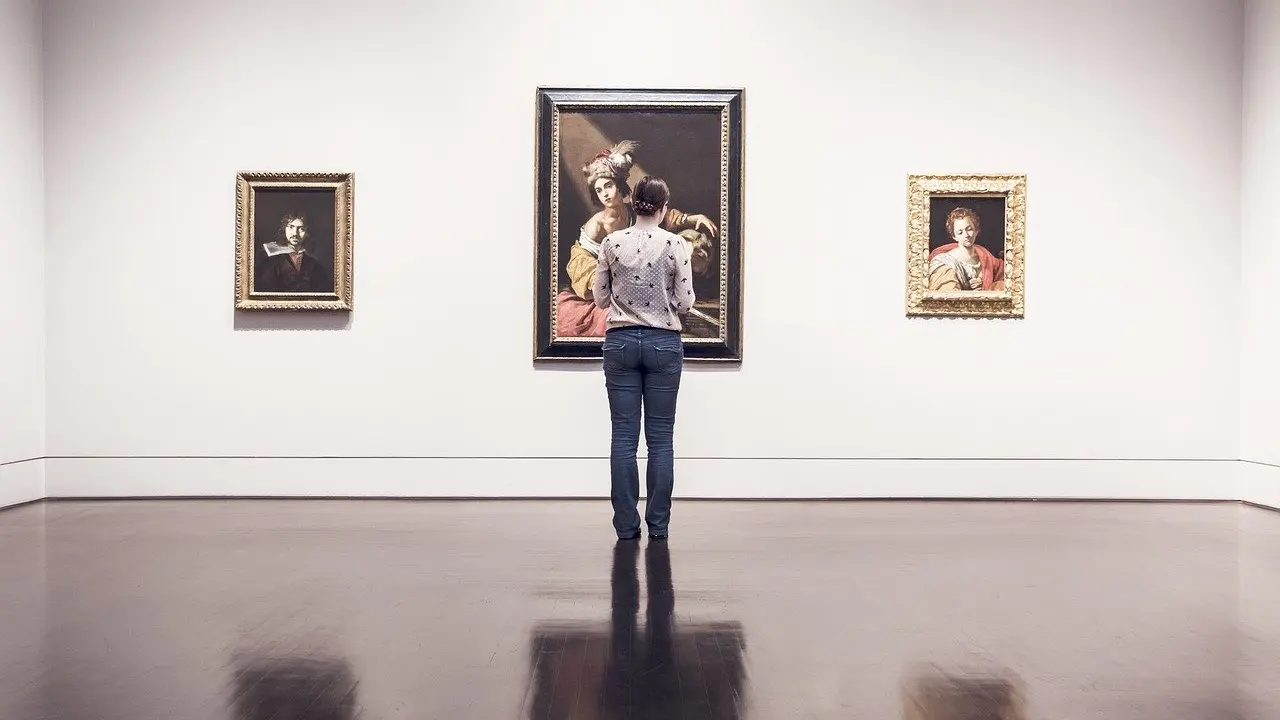
How to appreciate art for beginners comes down to an early decision: choose a single low-risk outing, ideally free or pay-what-you-wish, and look closely at a few works instead of trying to see everything.
The right outing depends on your budget, your tolerance for crowds and what already draws you. The sections below sort museums, galleries, theater and books by those criteria, and a table near the end collects admission details in one place.
Choose your first outing
The most dependable advice is to start small. The Occasional Traveller suggests picking just one cultural thing to do on an entire trip, and the same logic works at home. A single outing that goes well builds more appetite than a packed day that ends in fatigue. Free entry helps as well. The same writer notes that free options are a good way to get a taster, and a visit that costs nothing carries no pressure to get your money’s worth, so you can leave when your attention fades.
Four criteria decide most first outings:
- Cost. Free and pay-what-you-wish venues lower the risk of trying unfamiliar art. If you are unsure you will enjoy a visit, begin there and save paid exhibitions for later.
- Time and stamina. Some venues are open all day, while others offer a short free window. Choose an open-ended visit if you like to wander, and a short window if you prefer a defined plan with a clear end.
- Crowd tolerance. Free windows are popular and capacity is limited. If crowds make it hard to concentrate, favor a venue that is free throughout opening hours over a free evening.
- Starting interest. If you are drawn to stories, begin with a play or a book. If you are drawn to images, begin with a museum or gallery. Interest carries you further than obligation does.
Match the outing to your temperament
- Curious but cautious: try a commercial gallery or public art. Neither needs a ticket or a plan.
- Wants guidance: look for an institution that runs talks and classes alongside its exhibitions.
- Likes narrative: a night at the theater or a well-chosen book is a gentler entry than a silent room of paintings.
- Wants to make something: a class turns looking into an interest you can practice.
Each of these routes has its own conditions, and the sections that follow take them in turn, starting with the habits of looking that work in any of them.
Looking at art when you know little
You start appreciating art by looking longer than feels natural and noticing your own reaction before reaching for explanations. Expertise is not required. The approach below follows a beginner’s guide to modern art from Revart, and it works for older work as well.
Observe before you read
Revart’s guide says that to appreciate modern art, we must first learn to observe it closely and understand the artist’s intentions. Its practical instruction is to look beyond the first surface impression and attend to colour, shape and texture. Treat that as a short exercise. Pick a single work that catches your eye, stand with it, and describe to yourself in plain words what you see. Ask where the colours are strongest, what the shapes do, and whether the surface looks smooth, thick or scratched.
Do this before you read the wall label. A label tends to settle the question of what a work means, and your own description is the raw material that makes the label interesting rather than merely informative.
Notice what it stirs in you
The same guide recommends identifying the emotions, memories or experiences the artwork evokes in you. For beginners this is the step that makes a visit personal. A work that leaves you restless, calm or oddly nostalgic has told you something about what you respond to, and that information is more useful than a verdict of good or bad. Over several visits those reactions form a pattern, and the pattern tells you which galleries, periods or movements to seek out next.
Add the artist’s story afterwards
Once you have looked and reacted, Revart suggests that you read about the artist’s background, influences and creative process. Putting this step last is a deliberate choice. Context lands harder when you already have an impression to test against it. A label or a short biography then confirms, complicates or contradicts what you noticed, and the contradiction is often where the real interest lies.
Art movements as a map
Knowing a work’s movement gives you a frame for interpreting it. Revart states that understanding the art movement in which the artwork was created can help you appreciate it more fully. It describes modern art as characterized by rejecting traditional norms, styles and techniques in favor of experimentation and innovation. That description is a useful starting expectation: when a work looks strange, the strangeness is often the point.
The guide names these key movements within modern art:
- Abstract expressionism.
- Surrealism.
- Cubism.
- Pop art.
You do not need to memorize them. Use them as vocabulary for wall labels. When a label names one of these movements, finish looking at the work, read the label, then look again and ask what the artist seems to be turning away from and what they are trying instead. That second look is where a movement name earns its place.
A reasonable plan for a beginner is to choose a single movement per visit and hunt for it. A museum that hangs works by period or style makes this easy. A narrow target keeps you from drifting past everything at the same speed, and after a few outings the names stop being abstract.
Museums: making a visit work
You enjoy museums more when you choose an access model that suits you, plan around limited capacity and give yourself permission to see only a little. The details below draw on a guide to free art venues in New York City, so they show the range of arrangements you may find in your own city.
Choose the way in
Museums handle admission in several ways, and each suits a different visitor. Some, like the National Museum of the American Indian, are free every day with no ticket, which suits an unplanned visit. Others, like the Brooklyn Museum, are pay-what-you-can at all times. That suits someone who wants to contribute without being locked into a fixed price. Others offer a free or pay-what-you-wish window only at set times, which suits a visitor who can plan ahead.
The British Museum and the Studio Museum in Harlem show how different “free” can be. The table later in this guide sets the arrangements side by side. As a rule, a venue open all day with no ticket is the best choice for a first visit, because nothing about the logistics competes with the art for your attention.
Plan around limited capacity
Free windows draw crowds, and the same guide warns that capacity is limited. The Guggenheim’s window is a good example. It lasts only ninety minutes, and the museum strongly recommends advance reservations. The Whitney’s free entry for visitors aged 25 and under requires free timed tickets. Book early if the venue asks you to, and arrive at the start of a window rather than the end.
A short window is also an argument for restraint. Decide in advance on a few works or one room, and treat everything else as a bonus. Ninety minutes spent with a handful of pieces teaches you more than the same time spent trying to cover a building.
Learn the unwritten rules
Worry about etiquette keeps some first-timers away. How to Visit an Art Museum, published by Chronicle Books and stocked by the Kemper Art Museum shop, is described as showing you the sense and nonsense of museum etiquette, and it is available in an expanded edition. It is worth a look if rules are what hold you back. If they are not, you can skip it and learn the basics as you go.
Galleries, public art and library exhibitions
Galleries and public spaces are the lowest-pressure way to look at art, because several of them cost nothing and none of them demand a plan.
Commercial galleries
According to the same New York guide, every commercial gallery in Chelsea, the Lower East Side and DUMBO is free to enter during opening hours. That makes them ideal for browsing. You can walk in, look at what is on the walls, and leave without a ticket or an explanation. They suit you if you are unsure whether you like contemporary work, since a bad hour costs nothing. Stepping in and out of several in one neighborhood also lets you compare very different approaches in a single afternoon.
Libraries and public art
The New York Public Library’s exhibition halls are free to anyone during opening hours, and no library card is needed for general access. If your own city has a main library, check whether it hosts displays; they are an easy addition to an errand.
Revart also points out that street art and public art installations are great ways to interact with modern art. Both are accessible alternatives to formal museums, so they suit anyone who finds a quiet gallery intimidating. A mural on a walk to work requires no admission and no particular behavior, only attention.
Institutions that teach
Some art museums are as much about learning as displaying. The Tampa Museum of Art’s page on Bloomberg Connects lists an event calendar, studio art classes, and lectures and conversations. Look for that combination at a museum near you. A talk gives you the context that a silent room does not, and a studio class lets you test what you noticed with your own hands.
Theater tickets and finding events near you
Live performance is a different kind of outing from a museum visit, because it comes with a fixed start time and an audience. That structure helps many beginners, since the evening organizes itself. The practical challenge is finding events and paying a fair price, and both are manageable with a little routine.
Last-minute theater tickets
For plays, London’s TKTS booth is a source of discounted last-minute tickets, and the Occasional Traveller says it is one worth checking often. The takeaway applies beyond London. If your city has a discount booth or a last-minute ticket route, a flexible schedule lets you see a play without paying full price. This suits spontaneous people better than planners, who may prefer to buy ahead.
Build a simple events map
To answer “what is on near me”, copy a habit from that same traveler: make a list of ongoing events and mark them on your map. Seeing events by location turns scattered listings into a route, and you can pick what falls near somewhere you were already going. Fill the list from sources you can trust:
- Museum and gallery calendars. As the Tampa Museum of Art listing shows, an institution’s own site can hold its events, classes and talks in one place.
- Library exhibition spaces. These are often free and sit close to home.
- Public art and street art. These turn a walk into an outing without any listing at all.
Admission and free-day quick reference
These arrangements show the range of access models a beginner can use. Hours and rules change, so confirm them on the venue’s own page before you go.
| Venue | Access arrangement | Planning use |
|---|---|---|
| National Museum of the American Indian | Free every day, no ticket required | Best for an unplanned first visit |
| Whitney Museum | Free Friday evenings from 5 to 10 p.m.; age 25 and under free every day with free timed tickets | Suits evening visitors and younger visitors, who should book a timed slot |
| Guggenheim | Pay-what-you-wish Tuesday and Sunday, 4 to 5:30 p.m.; advance reservations strongly recommended | Reserve ahead and plan a small number of works |
| Brooklyn Museum | Pay-what-you-can at all times | Flexible for any day of the week |
| Metropolitan Museum of Art | New York State residents and New York, New Jersey and Connecticut students pay what they wish, with a one cent minimum | Worth checking if you qualify by residence or student status |
| Studio Museum in Harlem | Free every Sunday | A good weekend anchor for a day out |
These details come from a guide to free art venues in New York City, which also cautions that the free windows are popular and capacity is limited.
Use the table as a template rather than a list of places to visit. Your own city will have a similar mix of daily free entry, pay-what-you-wish arrangements and timed windows, and the same questions apply: does it require a ticket, how long does it last, and do you need to reserve?
Books and reading as a way into culture
Books are the cheapest and most flexible cultural entry point, and they work alongside museum visits rather than instead of them. A museum guide to etiquette is one kind of book; a favorite genre is another. If you already read for pleasure, follow that instinct and let it lead you outward. The guides below sort reading by taste.
- Romance, the broad view. Readers who want the convention that defines the genre can start with What Does HEA Mean in Romance Books? The Definitive Guide To Happily Ever After (2026) – Carnalnation, then browse The 12 Best Romance Books To Fall In Love With In 2026 — Picks For Every Taste – Carnalnation.
- Romance by subgenre. For magic and myth, try Enchanting Escapes: 15 Best Fantasy Romance Books For Adults To Read In 2026 – Carnalnation. For athletes and rivalries, there is Love On The Field: The 2026 Guide To Sports Romance Books—Tropes, Picks, And How To Choose – Carnalnation. For shapeshifters, Moonlit Hearts: The Best Werewolf Romance Books To Lose Yourself In (2026 Guide) – Carnalnation.
- Younger readers. Best Romance Books For Young Adults In 2026: Heartfelt Picks For Every Reader – Carnalnation collects picks for that audience.
- Poetry. Verse is a compact way to practice the slow attention that art asks for. If you are new to it, read how to read poetry, then try Rumi’s Love Poems: Timeless Mystical Verses To Heal, Ignite, And Guide You (2026 Guide) – Carnalnation or Short Poems About Love: 7 Tiny Verses That Say Everything (With Prompts For Your Own) – Carnalnation.
- Pictures and true stories. If you want a book with images built in, see best graphic novels for adults. For real lives, see best memoirs to read.
- Listening instead of reading. A commute or a walk can hold a book too, and best audiobook apps compares the services. For music, The Most Romantic Songs Of All Time: 50 Timeless Tracks To Set The Mood In 2026 – Carnalnation is an easy starting playlist.
Reading and looking feed each other. A memoir can send you to a museum, and a gallery visit can send you to a poem. Follow whichever thread pulls hardest, and do not worry about doing it in a proper order.
Going deeper: classes and shared habits
After a few outings, the next step is to make or discuss something, because that is when appreciation becomes a hobby rather than a one-off. The options below suit different temperaments.
- Take a class. Studio classes are a standard offering at museums such as the Tampa Museum of Art, and local listings are collected in art classes for adults near me. A class suits you if looking has made you curious about technique.
- Try a low-cost medium. watercolor for beginners covers supplies and first techniques for painting at home. If you are drawn to craft instead, stoneware vs porcelain explains two common clay types.
- Learn an instrument. For performance rather than visual art, the easiest instrument to learn as an adult is a sensible place to begin.
- Read with other people. If you prefer company, how to start a book club walks through setup, picks and discussion questions.
Whichever route you choose, keep the same principle that opened this guide: a small, well-chosen outing, repeated, builds more confidence than a large one done once.
Frequently asked questions
Do students and seniors usually get cheaper tickets?
Often, especially in Europe, so bring ID when you go. The Occasional Traveller notes that students and older visitors often enjoy some discounts.
Is it cheaper to buy museum tickets ahead of time?
It can be. Many museums and other attractions offer cheaper prices if you book your tickets early and online, according to the Occasional Traveller.
Is the British Museum free?
It is free for most of its exhibits, which makes it a low-risk place to try a large museum.
How much does a museum etiquette guidebook cost?
The expanded edition of How to Visit an Art Museum is listed at $21.00 USD in the Kemper Art Museum’s shop.